Glacier National Park Hiking Page

Welcome to the Glacier National Park Hiking Page
Here you will find information on hiking trails for day hikes and backcountry exploration, biking paths, and wilderness areas of interest for hikers.

-SPONSORED LINKS-
Glacier National Park Lodging
Glacier National Park Hotels
Glacier National Park Maps
Glacier National Park Camping
Montana Weather
Glacier National Park Tours
Glacier National Park Pictures
Glacier National Park Vacation
Cub and Sow by John W. Uhler

Sponsored National Park Search

Cub and Sow by John W. Uhler

Hiking Guide

  • Bear Guide
  • Biking Guide
  • Boating Guide
  • Hiking Guide
  • Index
  • Fishing Guide
  • Six Principles
  • Skiing Guide
  • Stock Info

  • 
    

    Hiking

    There are over 730 miles of hiking trails in Glacier National Park. One way to see and enjoy Glacier's beauty is to take a hike in the park. You can do a short hike, a day hike or an extended backcountry hiking and camping trip. To camp in the backcountry, you will need to obtain a free backcountry permit. There are over 114 miles of hiking trails in Waterton Lakes National Park as well. These backcountry trails wind through the mountains and valleys of the park. Trails are well marked on topographic maps available in the park. Permit are required for backcountry camping. Camping and open fires are allowed only in designated areas

    By mid-June, the trails are usually dried out enough to hike in the lower elevations. In the higher elevations, trails are not normally free of snow until late July. You may be aware of the need to cross streams of very cold water, so bring extra dry clothing to change into and do not attempt to cross steep snow banks.

    Over half of the visitors to Glacier National Park report taking a hike. That's a lot of hikers, but over 700 miles of trail provide many outstanding opportunities for both short hikes and extended backpacking trips.


    Nature Trails

    Five self-guided walks, interpret trailside features with brochures and signs are: The Trail of the Cedars, Huckleberry Mountain, Hidden Lake, Sun Point, and Swiftcurrent Nature Trails. These trails encourage hikers to experience Glacier National Park at their own pace. The Trail of the Cedars is wheelchair accessible.

    Day Hikes

    Good day hikes are plentiful. Visitor center staff will be happy to assist you with your choices and provide free maps of popular trails in park. Here are four of the more popular hiking areas: Lake McDonald, Many Glacier, St. Mary/Logan Pass and Two Medicine.

    All trail lengths are in miles going one way unless otherwise noted.

    Area Trail Length Trailhead
    Lake McDonald Apgar Lookout 3.3 Left on un-maintained gravel road past West Glacier horse corral, then over Quarter Circle Bridge 1.5 miles. Elevation climbs 1,850 feet

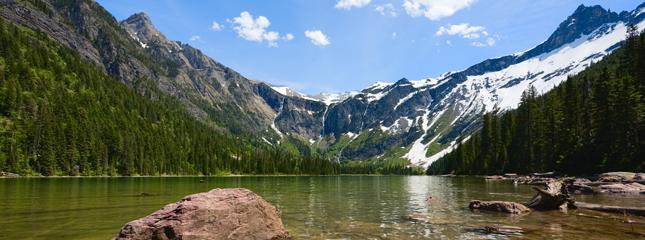
    Avalanche Lake 2.0 South of the Avalanche Gorge footbridge on the Trail of the Cedars. Elevation climbs 500 feet

    Fish Lake 3.0 Sperry Trailhead across from Lake McDonald Lodge. Elevation climbs 1,000 feet

    Granite Park 3.5 Granite Park Trailhead, 24 miles from Apgar on the Going-to-the-Sun Road. Elevation climbs 2,200 feet

    Howe Lake 2.0 5 miles north of Fish Creek Campground on the Inside North Fork Road. Elevation climbs 240 feet

    McDonald Creek 0.6 Asphalt bicycle path 50 yards south of Apgar Visitor Center. Elevation climbs 30 feet

    Mt. Brown Lookout 5.4 Sperry Trailhead across from Lake McDonald Lodge. Elevation climbs 4,325 feet

    Snyder Lake 4.4 Sperry Trailhead across from Lake McDonald Lodge. Elevation climbs 2,150 feet

    Sperry Chalet 6.4 Sperry Trailhead across from Lake McDonald Lodge. Elevation climbs 3,450 feet

    Trail of the Cedars 0.25 Across from the Avalanche Campground Ranger Station. Level boardwalk (wheelchair accessible)

    Trout Lake 4.2 1.5 miles west on the North Lake McDonald Road. Elevation climbs and descends 2,100 feet
    Many Glacier Appekunny Falls 1.0 Appekunny Falls Trailhead, 1 mile east of the Many Glacier Hotel. Elevation climbs 700 feet

    Cracker Lake 6.1 Cracker Lake Trailhead, south end of the Many Glacier Hotel parking area. Elevation climbs 1,400 feet

    Grinnell Glacier 5.5 Grinnell Glacier Trailhead at the Many Glacier Picnic area or the south end of the Many Glacier Hotel. 3.8 miles via boat & hike. Boats leave from the Many Glacier Hotel boat dock. Elevation climbs 1,600 feet

    Grinnell Lake 3.4 Grinnell Glacier Trailhead at the Many Glacier Picnic area or the south end of the Many Glacier Hotel. 0.9 miles via boat & hike. Boats leave from the Many Glacier Hotel boat dock. Elevation climbs 60 feet

    Iceberg Lake 4.7 Iceberg/Ptarmigan Trailhead behind the Swiftcurrent Motor Inn cabin area. Elevation climbs 1,200 feet

    Ptarmigan Falls 2.5 Iceberg/Ptarmigan Trailhead behind the Swiftcurrent Motor Inn cabin area. Elevation climbs 700 feet

    Ptarmigan Lake 4.3 Iceberg/Ptarmigan Trailhead behind the Swiftcurrent Motor Inn cabin area. Elevation climbs 1,700 feet

    Ptarmigan Tunnel 5.2 Iceberg/Ptarmigan Trailhead behind the Swiftcurrent Motor Inn cabin area. Elevation climbs 2,300 feet

    Swiftcurrent Nature 2.4 loop Grinnell Glacier Trailhead at the Many Glacier Picnic Area or the south end of the Many Glacier Hotel. Level trail

    Swiftcurrent Pass 6.6 Swiftcurrent Pass Trailhead at the west end of the Swiftcurrent Motor Inn parking area. Elevation climbs 2,300 feet

    The Going-to-the-Sun Road

    The Going-to-the-Sun Road is open to vehicle traffic from West Glacier to the Loop. Past the Loop the road is open to hiking and biking to a point about two miles beyond Bird Woman Falls Overlook. Both black and grizzly bears have been spotted recently. People are reminded that, as always in bear country, be alert to the potential of bears on or near the road. On the east side of the park the Going-to-the-Sun Road is open to vehicle traffic to Jackson Glacier Overlook. Hikers and bikers may continue up the road about another three miles.


    Permits

    Overnight Trips Hikers planning to camp overnight in Glacier's backcountry must stop at a visitor center or ranger station and obtain a backcountry permit. Permits are issued on a first-come, first-serve basis no more than 24 hours in advance of your trip.

    Posted Trails

    Trout Lake Trail - West Lakes Trailhead to the Camas Creek Junction is posted for grizzly bear and/or mountain lion activity. Extra caution is advised.


    The Six Principles of Leave No Trace

    1. Plan ahead and prepare

    Carefully designing your trip to match your expectations and outdoor skill level is the first step in being prepared. Adequate trip planning and preparation helps to accomplish trip goals safely, while minimizing impacts on the environment and on other users.
    Know the area and what to expect, including regulations and special concerns of the area.
    Travel in small groups, during seasons or days of a week when use levels are low.
    Bears may be present; balance safety concerns in bear country with ecological and social impact concerns.
    Select appropriate equipment to help you Leave No Trace.
    Repackage food into reusable containers, creating less trash to pack out.

    2. Camp and Travel on durable surfaces

    Whenever you travel and camp, confine your use to surfaces that are resistant to impact.
    In popular areas, concentrate use. In remote areas, spread use.
    Hike on existing trails to minimize disturbance to wildlife, soil and vegetation.
    Choose an established campsite, one with a slight slope so rain water can drain.
    Store food so that it is unavailable and uninviting to bears and small animals.
    Before departing, make sure your camp is as clean or cleaner than when you arrived.

    3. Pack it in, Pack it out

    Trash and garbage have no place in the backcountry. Consider the words "Leave No Trace" a challenge to take out everything that you brought into the backcountry. Pack out all of your liter.
    Repackage food into reusable containers and remove any excess packaging.
    Dispose of trash and garbage properly.
    Store food and odorous items in bear resistant food containers or hang items 10 feet above the ground.

    4. Properly dispose of what you can't pack out.

    As visitors to the backcountry, we create certain kinds of waste which cannot be packed out. These include human waste, waste water from cooking and washing.
    Dispose of human waste responsibility, utilize pit toilets or dig a cat hole 200 feet from the water.
    Use toilet paper sparingly, pack it out in doubled plastic bags to confine odor.
    Minimize soap and food residues in waste water.
    Avoid contaminating water sources when washing, maintain 200 feet from a water source

    5. Leave what you find

    The Wilderness Act states that wilderness "... is recognized as an area... where man himself is a visitor who does not remain,...with the imprint of man's work substantially unnoticeable..."
    People come to the wildlands to enjoy them in their natural state. Allow others a sense of discovery by leaving rocks, plants, archaeological artifacts antlers, and other objects as you find them.
    Minimize site alteration when camping, do not build structures.
    Avoid damaging live trees and plants.
    Avoid disturbing wildlife.
    Leave natural objects and cultural artifacts for others to enjoy.
    It is illegal to remove any cultural objects from any National Park. Cultural artifacts are protected by the Archaeological Resources Protection Act. All these "pieces of the past" contribute to our understanding of human and natural history, including the effects of disease, climate changes, and shifting animal populations on the land and her people. Removing these artifacts takes them out of context and removes a chapter from an important story. If you discover an artifact, enjoy it where it is. Leave it as you found it.

    6. Minimize use and impact from fires

    The use of campfires in the backcountry, once a necessity, is now steeped in history and tradition.
    Stoves are now essential equipment for minimum-impact camping trips because they are fast and eliminate firewood availability as a concern in campsite selection.
    Use dead and down wood only.
    In high use areas, build campfires in existing fire rings to concentrate impacts.

    These principles and practices depend more on attitude and awareness than on rules and regulations; they must be based on a respect for and appreciation of wild places and their inhabitants.


    Emergency Gear

    Waterproof matches in airtight containers, metal matches, fire starter and �tinder' are suggested. Extra food and clothing, a signal mirror, smoke flare, durable space blankets, plastic bags, and a good first aid kit are extremely valuable if you plan on being out for several days. Cord can be used to make a shelter and hang food in trees. Most hikers carry water purification filters or chemicals. Some even carry pocket strobe lights, and a few carry personal locator beacons. Plan to be self sufficient in any emergency. The land is vast and remote, and you cannot count on early help if you have difficulties.

    Equipment

    Try and keep your gear lightweight yet durable. Equipment should withstand rigorous use in a rough, mountainous countryside. Help could be many hours away should something go wrong with your gear.

    Food and Supplies

    Bring your food, equipment and other supplies with you. Avoid food such as bacon or smoked fish, soaps, and cosmetics with strong odors as they attract bears. Bottles and cans are hard to dispose of. If you take them in, you are expected to carry them out. Without some sort of bear proof storage, you should be prepared to hang your food as high as possible.

    Footwear

    Boots should be a sturdy hiking or mountaineering type that provides good ankle support. Some hikers prefer boots with the rubber shoe and leather upper, like the Maine Hunting Shoe. You can count on your feet getting wet regardless of your boot type, so durability and support should be a prime concern. Many pair of socks are essential. Tennis shoes are good for crossing rivers.

    Insects - Insect repellent is highly recommended.

    Map - The most common topographic maps are available from the Glacier Natural History Association, a non-profit organization.

    Rain gear and clothing

    Durable rain gear that covers both the upper and lower torso is a must for hikes of any length. The rain gear should keep out water in a steady down pour. Since you will probably get wet in any significant rain storm, wool or synthetic clothing that insulates when wet is highly recommended for wear under rain gear. Hypothermia is always a possibility with wet conditions and cool temperatures.

    Stove - A gasoline or propane stove is essential.

    Tents and sleeping bags

    You should have a tent with a waterproof floor, rain-fly, and a no-see-um netting, and this tent should be designed to withstand strong winds. Bring plenty of extra stakes and strong cord to keep the tent secure. Synthetics like �Polarguard' or �Fiberfill' are better than down because synthetics will insulate when wet while down will not. A sleeping pad will provide insulation as well as comfort.


    Bears and Pepper Spray

    An increasing number of backcountry hikers carry pepper spray as a possible deterrent against aggressive bears.

    What is Pepper Spray?

    This aerosol red pepper derivative affects an animal's upper respiratory system and mucous membranes, triggering temporary incapacitating discomfort. It is intended to be a non-toxic and non-lethal means of deterring bears. In two cases in Glacier National Park during 1993, and in cases throughout North America, pepper spray apparently successfully repelled aggressive or attacking bears. However, there are accounts where pepper spray has not worked as well as expected.

    Many factors influence the effectiveness of pepper spray.

    Spray distance, wind, wet or rainy weather, extremes of heat or cold, and product shelf life all may affect its usefulness. The decision to carry pepper spray as a bear deterrent comes down to a personal choice. If you decide to carry spray, it is your responsibility to use it wisely and only in situations where aggressive bear behavior justifies its use.

    Under no circumstances should pepper spray create a false sense of security or serve as a substitute for standard safety precautions in bear country.


    Stock Usage

    Generally, the trails of Glacier National Park are open to stock (i.e., horses, mules, donkeys, llamas),as well as foot travel. There are a few trails, however, that due to their physical condition or unsuitability, are not available for stock use. Check for maintenance schedules to determine if rock and downfall have been cleared from the trails. It is a good idea to check on the status of river crossings, especially the Middle Fork of the Flathead.

    Stock use is prohibited on paved roads at all times. Dirt roads where stock use is permitted include: the Old Flathead Ranger Station Road, the spur road to the Apgar Lookout Trailhead, the Bowman Lake road (when closed to vehicular traffic) and the Inside North Fork road (when closed to vehicular traffic).

    Certain conditions may cause trails to be closed to stock use. Generally, this is in the early summer, when they still have steep snow banks, before trails have dried out sufficiently, or during extended periods of wet weather. Bear activity may also result in temporary closures at any time. To be certain, check at a visitor center or ranger station.

    The day use limit shall be no more than 10 animals in a party, except on the trails listed on the reverse, where 20 shall be allowed due to special maintenance or other considerations. This list may be modified by the Superintendent.

    Overnight use of the backcountry is controlled by the issuance of a Backcountry Use Permit. Permits are issued for periods of up to 6 nights and may be obtained at visitor centers and major ranger stations. Advance reservations may be requested. Backcountry campgrounds have designated capacities for numbers of people and stock that cannot be exceeded. Competition is very keen at some areas for available space from July to mid-August. Stock users are encouraged to plan overnight trips after this period, when trails and campgrounds are less crowded, in better condition for horse travel, and there are fewer insects. When planning an overnight trip in the backcountry using stock, be aware that certain campsites are not available for stock use due to size or resource considerations

    Loading Ramps Area Limits

    If you are using a stock truck, there are loading ramps located at the sites listed below. Check with a visitor center or ranger station for exact locations. Overnight limits for specific campgrounds may not be exceeded for day use stop-overs; however, up to five head may be taken into areas that do not allow overnight use. Also, parties which exceed particular limits may pass through the area, but may not remain (Example: A 10-horse party may cross Brown Pass although only 5 head at a time may stop at the Brown Pass Campground). An information sheet with details about parking and loading ramps, for west side trailheads is available upon request.

    Low Impact Stock Use

    The proper use of Glacier's backcountry will prevent damage to the natural resources, maintain the aesthetic quality of the area, and avoid conflicts with other users. Please comply with the following regulations, guidelines and Leave No Trace techniques.

    Grazing of stock is not permitted. Stock users need to pack supplementary feed such as grain or pellets. Feed must be hung out of reach of bears using the established food hanging device or an NPS approved bear-resistant feed container (available to checkout at permit stations).

    Transporting hay into or through Glacier is prohibited, except on the portion of U.S. Highway 2 which passes through the park. Due to problems with noxious weeds, feeding hay at trailheads or backcountry campgrounds is prohibited.

    When not being used, pack and saddle stock must be tethered. Horses, llamas or mules that are nervous "diggers" or "pawers" should be hobbled when tied to prevent unnecessary damage to the terrain. Please tie at least 200' from streams or lakes

    Always use hitch-racks where provided. Where there are no hitchracks, tie a rope between two trees, "a highline" away from the trail and hitch the stock to the rope. This avoids damage to the tree and trampling around the root system.

    Stock are not permitted in the camping areas of campgrounds. Load & unload at the hitchrails provided. Loose herding or trailing is prohibited.

    Hikers are required to stand quietly on the lower side of the trail and yield the right-of-way to stock. Many hikers do not know and understand the need for this procedure, so stock users are encouraged to courteously coach them on proper meeting procedures.

    Please stay on established trails. Cross-country riding or riding on paved roads is not permitted.

    Scatter manure after camping or stopping for long periods and smooth out any ruts or holes.

    Stock is not permitted in auto campgrounds.

    Trails Closed to Stock

    In the Lake McDonald Valley

    Avalanche Lake Trail
    Loop Parking Area to Packer's Roost Trail Junction (Granite Park Trail)
    Spur Trail to Sperry Glacier
    Trail of the Cedars Nature Trail

    At Logan Pass

    Hidden Lake Trail
    Logan Pass to Granite Park Chalet

    In the Many Glacier Valley

    Appekunny Falls Trail
    Grinnell Glacier Trail
    Hidden Falls Trail
    Josephine Walkway
    Swiftcurrent Lake Nature Trail

    In the St. Mary Valley

    Baring Falls from Sunrift Gorge
    Sun Point Nature Trail

    In the Two Medicine Valley

    Dawson Pass to Cutbank Pass Trail Junction
    Running Eagle Falls Nature Trail

    In Other Parts of the Park

    Hole-in-the-Wall Spur Trail
    Huckleberry Mountain Nature Trail
    Spur Trail to Lake Francis

    20-Head Limit (Day Use Only)

    Apgar Lookout Trail
    Apgar Mountain Loops
    Apgar Flats Trail
    Cracker Lake Trail
    Gunsight Pass Trail (Lake McDonald Lodge Trailhead to Sperry Chalet)
    Josephine Lake/Grinnell Lake (Horse Trails)
    McDonald Valley Trails
    Red Gap Pass Trail (Many Glacier Road to Poia Lake)
    Swiftcurrent Pass Trail (Many Glacier to Granite Park)
    Bowman Lake Road*
    Inside North Fork Road*
    The Old Flahead Ranger Station Road
    The Spur to Apgar Lookout Trailhead

    *When closed to vehicles

    Check with Rangers for specific locations.

    Loading Ramps

    Apgar Horse Concession
    Bowman Lake
    Camas Creek Trailhead
    Chief Mountain Trailhead
    Coal Creek Trailhead
    Fielding Access Road Trailhead
    Gunsight Pass Horse Trailhead
    Kishenehn Trailhead
    Lake McDonald Ranger Station
    Lincoln Lake Trailhead
    Logging Creek Ranger Station
    Many Glacier Horse Concession
    Mt. Henry at Two Medicine Trailhead
    Nyack Trailhead
    Packer's Roost Trailhead
    Sperry Chalet Trailhead (near campstore)
    Walton Ranger Station

    Stock Use at Bowman Lake

    Stock users may keep up to ten head of stock at the Bowman Lake Corral while they camp at Bowman Lake Campground (about � mile away). Prior permission must be obtained from the Polebridge Ranger Station (888-7842).

    Noxious weed-seed free pellets and grain may be fed, but hay is prohibited


    Bear Guide

    Type: Grizzly

    Range: Common in mountain and forest areas throughout western Canada and Alaska. Currently listed as a threatened species in the lower 48, United States.

    Life Expectancy: 15 to 25 years

    Height: Six feet or more when standing on hind legs; three to four feet when standing on all fours.

    Weight: Up to 1,400 pounds, usually 300 to 600 pounds.

    Color: Blond to nearly black. Sometimes silver-tipped, giving a "grizzled" look.

    Other Features: Dished face. Hump of heavy muscle over the shoulders. Claws often four inches long. Mediocre vision, but excellent sense of smell. Fast runner, able to cover 180 feet in just three seconds! Enters den in Nov to hibernate until spring.

    Food: Omnivorous, with only 10 - 20% of its diet coming from meat, mainly carrion and rodents. Also eats huckleberries, cow parsnip, glacier lily bulbs, wet-meadow plants, and grasses, foraging primarily around dawn and dusk.

    Reproduction: Mates in early summer. One to four cubs, each weighing about one pound, are born mid-winter.


    Type: Black Bear

    Range: Widespread in mountain and forest areas throughout the U.S. and Canada.

    Life Expectancy: 15 to 25 years.

    Height: Two and a half to three feet when standing on all fours.

    Weight: Adult males average 220 pounds. Adult females average 140 pounds.

    Color: Black, brown, cinnamon, or blond. Color never reliably distinguishes a black bear from a grizzly. Muzzle sometimes a lighter color.

    Other Features: Generally appears less massive than the grizzly bear. Profile more "Roman-nosed" and claws much shorter (about one and a half inches long) than the grizzly's. Also a fast runner with a keen nose but mediocre eyesight. Hibernates throughout winter, generally from about Oct or Nov to some time in Apr or May.

    Food: Omnivorous, eating almost any available food item. Berries, new growth, bulbs, insects, carrion, and tree cambium are all favorite foods for this dawn, dusk, and night feeder.

    Reproduction: Mates in late spring to early summer. Gestation is 220 days with average litter size of two cubs, born in Jan to early Feb.


    Be Bear Aware

    Avoid surprising animals at close range. Whistle, talk, sing, or otherwise make noise when hiking in areas where visibility is limited or bear sign present. Take no pets; they are prohibited in the backcountry. A dog's valor may turn into retreat bringing an infuriated bear to you.

    Be alert to sign (droppings, diggings, fresh tracks, etc.), sounds, or other indications of bears. Be particularly wary when hiking wildlife trails, salmon streams, or other areas where bears concentrate.

    Food and beverages should never be left unattended. Foodstuffs with strong odors such as fish, cheese, sausage, and fresh meats should be stored in a food cache, a bear resistant container, or suspended 10 feet above ground. Carry all refuse and garbage out! Buried refuse will attract bears.

    Keep packs and other personal gear on your person. It is easy to become separated from belongings left lying on the ground when a bear unexpectedly approaches. Bears will investigate, often destructively.

    Do not approach bears

    The minimum safe distance from any bear is 500 feet; from a sow with young it is 1000 feet. These are MINIMUM distances, there are many times that greater distances are required!

    Regardless of precautions taken, you may come across a bear. Usually they will run away. A bear standing on hind legs may only be trying to sense you better, not preparing to attack. Even a charge is often a bluff, ending abruptly short of physical contact.

    If you see a bear at a distance, turn around or make a wide detour. Keep upwind if possible so the bear will get your scent and know you're there. Talk in an assured tone to communicate your presence. Treat animals as if cubs are nearby. Assume the bear will be defensive. Do not approach closer to scare a bear away as you may be considered a threat.

    Do not run. Running often elicits attacks from otherwise non-aggressive bears and they can travel over 35 miles per hour.

    Avoid actions that interfere with bear movement or foraging activities.

    Be satisfied with a distant photograph, or use a telephoto lens. Many fatalities and injuries have been related to photography.

    Do not corner an animal. Allow them plenty of space and an escape route.

    Bears are typically solitary animals. Much of their communication at feeding aggregations serves to maintain spacing and avoid conflict. Bears appear to have only a limited repertoire for this purpose. These behavior patterns are not highly ritualized, as in some species; therefore, their meaning is largely dependent on the context of the situation. Descriptions of some behavior and a general interpretation of meaning follow to help you understand what a bear may be trying to tell you. Remember, each bear is an individual and each encounter is unique.

    Postures

    Standing on hind legs - A bear standing bipedally is typically not expressing aggression. Bears generally stand on their hind legs to gain more information, both olfactory and visual.

    Stationary lateral body orientation - A bear may stand broadside to assert itself in some instances. In encounters with human, it has usually been interpreted as a demonstration of size.

    Stationary frontal orientation - If a bear is standing and facing you, it is certainly not being submissive. This is an aggressive position and may signal a charge. It is likely waiting for you to withdraw.

    Vocalizations

    Huffing - When a bear is tense, it may forcibly exhale a series of several sharp, rasping huffs. A mother may also huff in order to gain the attention of her young.

    Woof - A startled bear may emit a single sharp exhale that lakes the harsh quality of a huff. If her cubs woof, a mother will immediately become alert to the situation.

    Jaw-Popping - Females with young often emit a throaty popping sound, apparently to beckon their cubs when danger is sensed. A mother vocalizing in this manner should be considered nervous and extremely stressed. Bears other than sows also jaw-pop.

    Growl, snarl, roar - Clear indication of intolerance.

    Other Indicators

    Yawning - Indicates tension. This behavior may results from the close proximity of another bear or human presence.

    Excessive Salivation - A clear sign of tension, salivation may appear as white foam around the bear's mouth.

    Charge - The vast majority of charges are ones in which the bear stops before making contact. The intensity of the charge or associated vocalizations may vary, but it is distinct in that it is an aggressive or defensive act clearly directed at another bear or human. Bears may charge immediately, as a sow fearing for her cubs, or may emit stressed or erratic behavior before charging.

    There is no guaranteed lifesaving method of reacting to an aggressive bear. Some behavior patterns have proven more successful in close encounters than others. Take a calm assured posture. A firm voice and gradual departure are better than a retreat in panic. Include the nature of your surroundings in your reaction.

    As a last resort, lie face down, protect your neck with your hands and arms, and don't move. This requires considerable courage, but resistance would be futile. Numerous incidents exist where a bear has sniffed and departed without serious injury.

    Bears and Pepper Spray

    An increasing number of backcountry hikers carry pepper spray as a possible deterrent against aggressive bears.

    What is Pepper Spray?

    This aerosol red pepper derivative affects an animal's upper respiratory system and mucous membranes, triggering temporary incapacitating discomfort. It is intended to be a non-toxic and non-lethal means of deterring bears. In two cases in Glacier National Park during 1993, and in cases throughout North America, pepper spray apparently successfully repelled aggressive or attacking bears. However, there are accounts where pepper spray has not worked as well as expected.

    Many factors influence the effectiveness of pepper spray.

    Spray distance, wind, wet or rainy weather, extremes of heat or cold, and product shelf life all may affect its usefulness. The decision to carry pepper spray as a bear deterrent comes down to a personal choice. If you decide to carry spray, it is your responsibility to use it wisely and only in situations where aggressive bear behavior justifies its use.

    Under no circumstances should pepper spray create a false sense of security or serve as a substitute for standard safety precautions in bear country.


    Biking

    Wheeled vehicles are restricted to established roadways, bike routes or parking areas and are not allowed on trails. Waterton Lake National Park does allow bicycling on a few specific trails.

    Bicyclists must observe all traffic regulations, keep well to the side of the road and ride in single file only. Pull off the road if four or more vehicles stack up behind you. In low visibility (fog or darkness) a white light in front and a red reflector on the rear of the bike are required. Be visible! Attach a bright flag on a pole and wear light colored clothing. Watch for falling rocks, drainage grates, and ice on the road.

    Hiker-Biker Campsites

    A limited number of sites at Apgar, Fish Creek, Sprague Creek, Avalanche, Many Glacier, Rising Sun, Two Medicine, and St. Mary campgrounds are reserved until 9:00 pm for bicyclists, pedestrians, and motorcyclists. Sites are shared and have a capacity of 8 people; larger groups must split up. The fee is $3.00 per person. If hiker/biker sites are full, campers must use regular unoccupied campsites.

    For bicyclist's safety and to ease congestion, restrictions are in effect on sections of the Going-to-the-Sun Road, from June 15 to Labor Day.
    From Apgar Campground to Sprague Creek Campground bicycles are prohibited both directions between 11:00 am and 4:00 pm.
    From Logan Creek Pass east-bound (uphill) bicycle traffic is prohibited between 11:00 am and 4:00 pm.
    Start early! It takes about 45 minutes to ride from Sprague Creek to Logan Creek and about three hours from Logan Creek to Logan Creek.


    Fishing

    Many people wonder why the National Park Service no longer plants fish in park waters after this was done for many decades to enhance sport fishing. The reason is simple. The introduction of exotic game fishes was found to be detrimental to Glacier's native fishes. Predation and competition for space and food adversely affected several native species, and hybridization between indigenous and non-native species of fish also occurred. The native westslope cutthroat trout has been all but eliminated from several lakes, where it was once the dominant species.

    Today the National Park Service is engaged in fisheries research to determine the extent of damage to native fish populations, and to explore possible means for re-establishing native fishes in some waters where they have been eliminated or replaced by hybrid populations. Paramount importance is attached to the goal of ensuring the future survival of Glacier National Park's unique native fishes for the benefit and enjoyment of future generations.

    The primary purpose of Glacier National Park is to preserve natural ecosystems for their aesthetic, educational, cultural and scientific values. Fishing is permitted when consistent with preservation or restoration of natural aquatic environments, native fishes, and other aquatic life. Objectives of the management of fish and aquatic environments in the park are:

    Season

    General park season is from the third Saturday in May, through November 30, with some exceptions: Waterton Lake season, catch and possession limits are the same as set by Canada*

    Lower Two Medicine Lake season, catch and possession limits are set by the Blackfeet Nation.*
    Lake McDonald and St. Mary Lake are open to lake trout (mackinaw) fishing only from April 1 through December 31.
    North and Middle Forks of the Flathead River, see Boundary Rivers section.

    * Regulations may change from year to year. Check before fishing these waters.

    Catch and Possession Limits

    Daily catch and possession limits will not exceed five (5) fish, including no more than:

    Fishing for bull trout is prohibited and any bull trout incidentally caught must be immediately released.

    Catch and Release Fishing only:

    Fish caught in Lower McDonald Creek (from the Quarter Circle Bridge and upstream, extending into Lake McDonald for a radius of 300 feet) must be handled carefully and released immediately to the stream/lake. Only artificial flies or lures with a single hook may be used in Lower McDonald Creek. No fish of any species may be in possession at any time along this stream/lake. Fish caught in Hidden Lake and outlet must be released, except when closed for spawning. Cutthroat trout caught on the North Fork of the Flathead River must be released in accordance with state regulations.

    Equipment and Bait

    Cleaning Fish

    When cleaning fish, use garbage cans where available for entrails disposal.
    When cleaning fish in the backcountry, puncture the air bladder, and throw entrails into deep water at least 200 feet from the nearest campsite or trail. Do not bury or burn entrails, as they will attract bears.
    Consider "catch and release" fishing; otherwise, keep only enough fish for a meal. Be a clean fisherman! Leave nothing behind--except a few footprints.

    Boundary Rivers

    The Middle Fork of the Flathead River is outside of the park, and a Montana State fishing license is required. When fishing from the park lands along the North Fork of the Flathead River, park catch and possession limits, as well as other park fishing regulations are applicable, with the exception of the state regulations pertaining to cutthroat trout. (see Catch and Possession Limits section)

    Closed Waters

    The following areas are closed to fishing:

    The following creeks are closed for their entire length: Ole, Park, Muir, Coal, Nyack, and Fish Creeks. Hidden Lake and outlet creek during cutthroat trout spawning.

    Fishing Tips

    The success of a fisherman depends on skill, lures used, weather conditions, time of year, whether a boat is used or not, and the body of water fished. The following are some helpful tips:

    Catch and Release Fishing and Bears

    Consider yourself lucky to see a black or grizzly bear. But remember...the wilderness is their home. Please be a well-mannered guest. Bears are usually shy; however, make no attempt to approach or startle them. They have been known to attack without warning. When hiking make some noise to alert them of your presence. Never offer food to bears and never get between a sow and cub. As bears have an excellent sense of smell, it is important to avoid the use of odorous food. Backcountry camping regulations require that food, cooking utensils, and food containers be suspended from the designated food hanging device at all times, except mealtimes. If needed, when not in a designated campground, suspend food and cooking utensils at least 10 feet above the ground and 4 feet from any tree trunk. In the absence of trees, store food and cooking gear in approved bear resistant food containers. Never leave food unattended.

    Report all bear sightings to a ranger.


    Boating Guide

    Glacier National Park offers a variety of boating experiences. Boat launching ramps are available on Bowman and McDonald Lakes on the west side, and St. Mary and Two Medicine Lakes on the east side of the park.

    Canoes or rafts can be carried to many smaller waters. White water canoeing, kayaking, or rafting can be enjoyed on the Flathead River which forms the south and west boundary of Glacier.

    The rivers and lakes in this mountainous region are very cold. All water users (boaters, swimmers, and skiers) should be aware of the dangers of hypothermia at any time of the year.

    Registration

    All motorboats and sailboats 12 feet in length and longer must be registered and numbered according to State of Montana regulations. Hand propelled boats are exempt, and boats from other states or countries may be used temporarily without Montana registration.

    Rules of the Waterways

    Where Permitted

    Hand-propelled boats and sailboats are permitted on all park waters, except on a section of Upper McDonald Creek. The section of Upper McDonald Creek between Mineral Creek and Lake McDonald is closed to all types of boating and floating to protect nesting Harlequin ducks.

    Privately owned motorboats and motor vessels are prohibited from all park waters with the exception of the following:

    Motorboats and motor vessels are allowed on McDonald, Sherburne, St. Mary, Two Medicine, and Waterton Lakes (no boat launch ramps exist on Sherburne Lake; only hand carried craft are permitted).

    Motorboats and motor vessels are allowed on Bowman and Two Medicine Lakes but are limited to ten (10) horsepower or less

    Required Equipment

    Accidents & Reports

    Any accident resulting in death, personal injury, or property damage shall be reported (by each boat operator involved) to a park ranger as soon as possible, and no later than 24 hours after the incident. Boaters should render assistance to all persons needing help.

    Give in writing the name and address of the boat operator and the identification of the boat to any injured person or to the owner of any property damaged.

    Not Allowed

    Water Skiing

    While water skiing, at least two competent persons must be in the towing boat, one of whom (other than the operator) must observe the person being towed.

    Each person being towed must wear a lifesaving device. If device being worn is not approved by the USCG, an approved device must be readily available in towing boat. Anyone water skiing must wear personal floatation device - ski belts are not USCG approved and are no longer acceptable.

    Water skiing is permitted only on Lake McDonald and St. Mary Lake, and only from sunrise to sunset.

    Towing is prohibited within 100 feet of any person swimming or diving.

    Noise Level

    A federal regulation prohibits the use of watercraft exceeding 82 decibels of noise within all national parks. This regulation is strictly enforced on all park waters. Those operating personal watercraft and other high-powered boats should check their engine noise levels to be sure they comply with the regulations. Personal watercraft (jet skis) are currently prohibited.

    Shoreline Closures

    Boating may be restricted in certain areas for safety or to protect sensitive wildlife habitat. Marker buoys and/or signing will be placed to designate the closures.

    To provide for the safety of the general public using beaches for swimming and other similar activities, the segments of the south shoreline of Lake McDonald, as described below, are closed to the beaching of any motorized watercraft; and, motorized watercraft are prohibited within an area extending into the water 300 feet perpendicular to the shoreline.

    The section of shoreline beginning at the outlet of the lake and extending eastward approximately 60 yards west of the existing concession boat docking facility.

    The section of shoreline beginning at the Apgar Amphitheater and extending eastward to the point the shoreline meets the Going-to-the-Sun Road.

    Camping

    Undesignated camping is not allowed on lakes or lakeshores.

    A Backcountry Use Permit is required for all designated backcountry campsites. A fee of $4 per person per night will be charged at the time of permit issuance (June 1 through September 30). There is no fee for campers aged 16 and under. An additional fee of $20 will be charged for confirmed advance reservations.

    Regulation

    National Park Service boating regulations will be found in Title 36, Part 3, of the Code of Federal Regulations and are available at park headquarters and staffed ranger stations.

    It is your responsibility to know and obey the U.S. Coast Guard and State of Montana regulations for boat operation & safety.

    Park rangers may inspect or board any boat for the purpose of examining documents, licenses, and/or other permits relating to the operation of the boat and to inspect the boat to determine compliance with regulations.


    Skiing Guide

    Before Your Trip

    Enjoy Glacier�s winter landscape but, take into account your skiing ability, and check with rangers for local weather and snow conditions. Severe weather, lack of snow, winter rains, or melting conditions can quickly alter the difficulty of any winter trip. Ice is common on roads and on heavily skied trails. Plan to break trail on less popular routes. The Middle and North Forks of the Flathead River present major barriers to travel on the west side of the park. Skiing on frozen lakes is dangerous and not recommended. Skiers, snowshoers, and hikers are asked to maintain separate tracks.

    As winter snows start to melt, emerging vegetation is revealed. Please stay off these fragile areas. Spring skiing opportunities remain at Granite Park, Many Glacier, and Logan Pass, but remember, warming conditions greatly increase avalanche activity.

    Most ski routes are not marked. Pay attention to descriptions and local landmarks. A topographic map will help.

    Arduous cross park trips contain extreme avalanche and terrain hazards and should be attempted only by experienced and well equipped parties.

    A permit is required for backcountry camping. Practice "Leave No Trace" camping techniques described in the information provided with your permit.

    Skiers and snowshoers please register at the trailhead registration boxes. Climbers should complete the Voluntary Climbers Registration form, available at ranger stations and the Apgar Visitor Center.

    Pets are not allowed on trails, unplowed roads, in the backcountry or off leash. Snowmobiles are not permitted anywhere in Glacier National Park.

    Avalanches

    Avalanches are a major danger and potential killer to winter backcountry travelers. An understanding of avalanche conditions is the skier�s best defense. Watch the signs of previous activity. These include old avalanche paths, downed trees, recent slides, and clumps of snow. Choose the safest route. Stay off cornices, steep to moderate open slopes, and stay out of gullies. If you must travel on a dangerous slope, go straight up or down; never traverse back and forth.

    Glacier is part of the Northwest Montana Avalanche Warning System, which provides a weekly assessment of local avalanche conditions. Forecasts are updated each Friday morning during the avalanche season, and broadcast by local radio stations. Information can also be obtained by calling 257-8402 or 1-800-526-5329.

    About 80% of avalanches occur during and immediately after storms. Avalanche activity increases with a foot or more of new snow, snowfall of one inch or more per hour, sustained winds over 15 miles per hour, changing temperatures, and during spring warming. Learn to recognize dangerous weather conditions. Carry rescue equipment including rescue shovels, ski probe poles, and transceivers. If you must cross a steep slope, cross one at a time, loosen all pack straps, remove ski pole straps, fasten all layers of clothing, and put on a hat and gloves.

    If caught in an avalanche, discard all equipment and make swimming motions toward the surface. As the sole survivor, do not go for help unless it is only a few minutes away. After 30 minutes, the buried victim has only a 50% chance of surviving. Mark the place where the victim was last seen, search directly downslope from this point for clues, and begin to probe immediately at the most likely location. Use probes, ski poles, skis, or anything available. With more than one survivor, send for help while the rest search.

    Hypothermia

    Winter backcountry travel increases the risk of hypothermia and frostbite. Hypothermia, the "progressive physical collapse and reduced mental capacity resulting from the chilling of the inner core of the body", is the primary killer of outdoor enthusiasts. Drink liquids, stay dry, carry survival equipment, wear layers of warm clothing, and snack frequently. Be alert to symptoms of drowsiness and confusion. Once hypothermia sets in, external sources of warmth are necessary to revive the victim. Frostbite can occur on the ears, fingers, toes, face, or any exposed skin.

    Wildlife

    Wildlife viewing remains very rewarding in winter. Remember, survival during the long winter is difficult for Glacier�s wildlife. Human contact adds unnecessary stress. Avoid approaching or startling any animals or birds. All park animals are wild and should never be fed. Bears, asleep for most of the winter, sometimes awaken for short periods of time. As always in bear country, exercise extreme caution, especially with food and garbage. If approached by a mountain lion, act aggressively. Do not run! Lions may be scared away by being struck with rocks or sticks, or by being kicked or hit.


    Glacier National Park Travel Packets Willy Lures. Hot new colors for 2002!

    Glacier National Park Links
    Bullet Bear Guide
    Bullet Biking Guide
    Bullet Boating Guide
    Bullet Border Crossing
    Bullet Brochures, Maps, Written Info
    Bullet Camping Guide
    Bullet Chat Page
    Bullet Cross Country Skiing Guide
    Bullet Establishment
    Bullet Fishing Guide
    Bullet Geology
    Bullet Hiking Guide
    Bullet History
    Bullet Jobs, SCA, Volunteer Positions
    Bullet Location Guide
    Bullet Lodging Guide
    Bullet Mammal List
    Bullet Map Guide
    Bullet Park Information
    Bullet Pet Information
    Bullet Roads
    Bullet Search
    Bullet Sights Guide
    Bullet Size & Visitation
    Bullet Stock Usage
    Bullet Travel Guide
    Bullet Visitors Guide
    Bullet Weather
    Bullet Wildflowers
    Bullet Wildlife

    Glacier National Park
    Montana /National Parks Back to National Parks
    Equip yourself for your next National Park adventure by visiting our Outdoor Gear and Equipment Store


    by John William Uhler

    Copyright © 1995 - 2007 Hillclimb Media

    Click Here to obtain Advertising Information on this Page

    This site is in no way associated with the United States Government, the Department of the Interior or the National Park Service

    Demand Media Network

    Privacy Policy